Everything You Should Know About
Home Window Replacement
While it is easy to see how your siding’s paint fades over time and your roof is subject to the continuous onslaught of nature, our home's windows somehow seem to last forever. And while they do in fact last a good long time, like every component of your home, they have a lifespan and eventually need to be replaced.
However, many homeowners aren’t sure when it makes sense to replace their windows or what they need to consider before getting new ones. This article will cover everything you need to about replacing your windows, including features to look for, how to find a home glass replacement contractor, and much more!
When do you need to replace your windows?
Windows are a long lasting component of your home - and let’s be honest, replacing them isn’t cheap. However, there does come a time when replacement is worth it. Here are some signs that it may be time to start shopping for replacement windows:
- Drafts: If you feel a slight breeze even when your windows are closed, it’s a sign that your windows are no longer sealing properly. This leads to higher energy bills and decreased comfort.
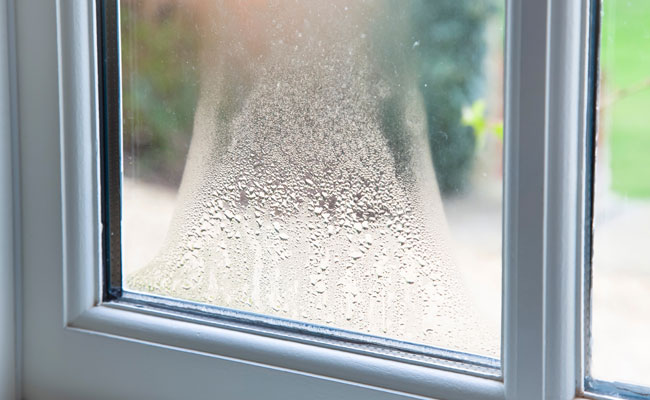
- Condensation Between Panes: This indicates that the seal for your multi-paned window has failed, and your windows are no longer insulating your home well.
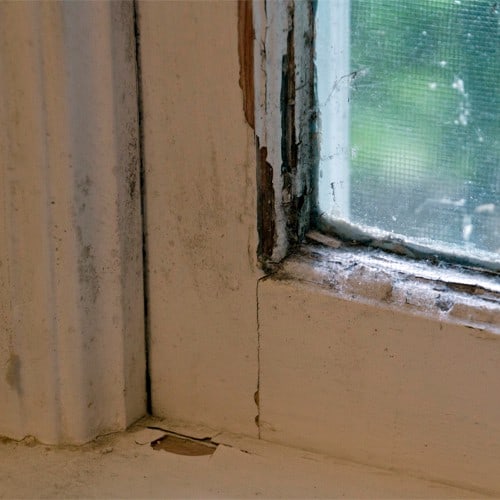
- Visible Damage or Deterioration: Cracked frames, broken glass, and warped or rotting wood are clear indicators that your windows need replacement.
- Difficulty in Operation: Windows that are hard to open, close, or lock not only reduce your home’s security but also its ventilation.
- If Your Home Has Single Pane Windows: Single pane windows offer only a small fraction of the insulation capacity of modern multi-pane windows. On average, replacing single pane windows with double-paned windows lowers monthly utility bills by 13%!
What are the primary advantages of replacing your windows?
The most common reason people have for replacing their windows is enjoying lower utility bills. However, there are other serious benefits that come along with this major home improvement upgrade:
- Improved Energy Efficiency: Modern windows are designed to better insulate your home, lowering your energy bills.
- Improved Lifespan for HVAC: Since your HVAC will need to work less hard to maintain a comfortable temperature, you can expect these systems to last longer and require fewer repairs.
- Enhanced Comfort: New windows eliminate drafts, providing a more consistent indoor temperature.
- Noise Reduction: Double or triple-pane windows and modern window frames significantly reduce outside noise, creating a quieter, more peaceful indoor environment.
- Increased Home Value: High-quality windows improve the curb appeal and market value of your home.
- Better Security: Newer windows come with improved locking mechanisms, enhancing the safety of your home.
- Ease of Use: New windows open effortlessly, allowing you to open them for ventilation or cleaning without fighting a stuck window sash.
What are the core components of a window?
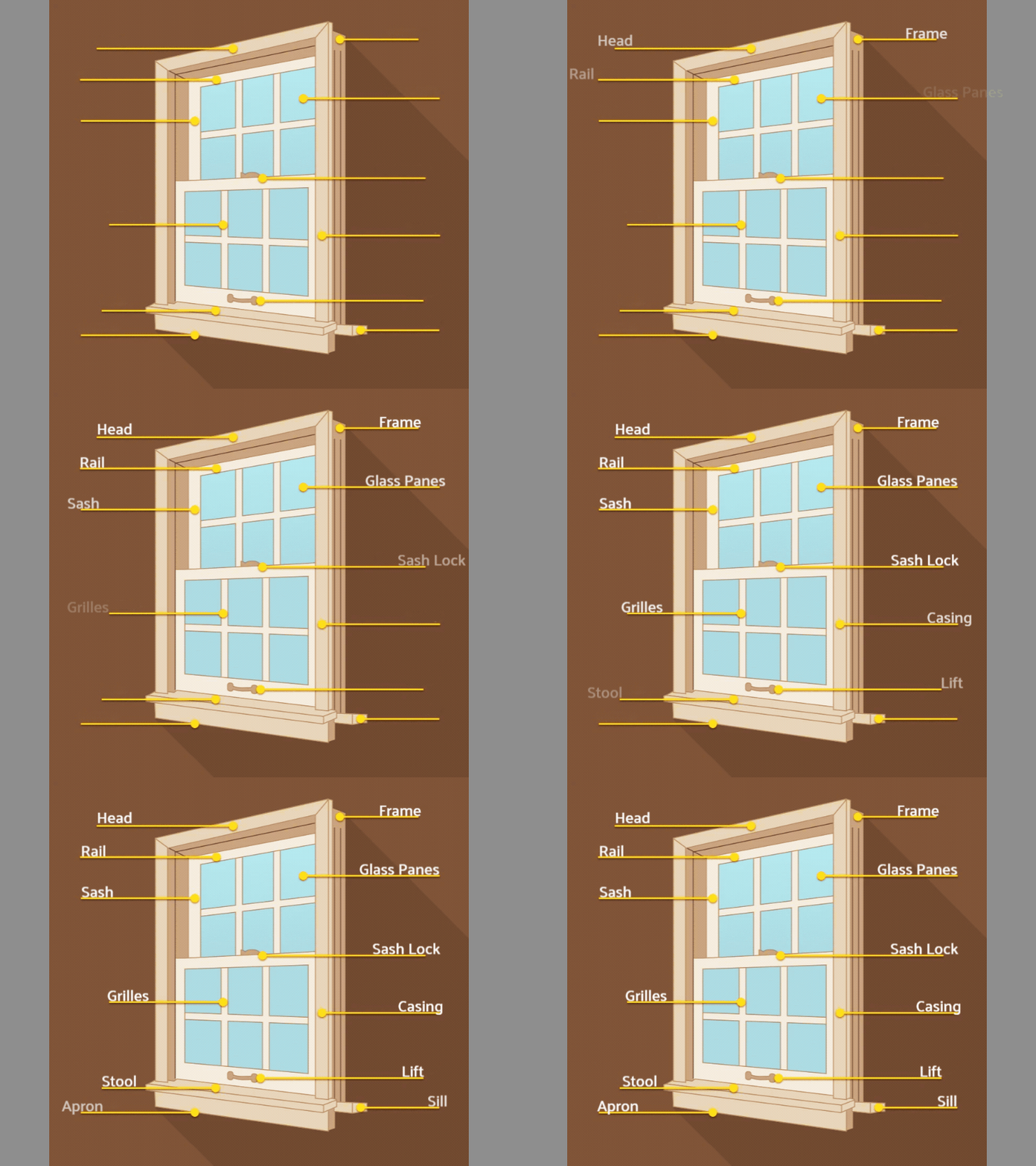
While ‘glass’ is an obvious part of a window, the truth is that windows are complicated systems that involve many different components:
Frame
- Head: The top horizontal part of the window frame.
- Sill: The bottom horizontal part of the window frame.
- Jambs: The vertical sides of the window frame.
Sash
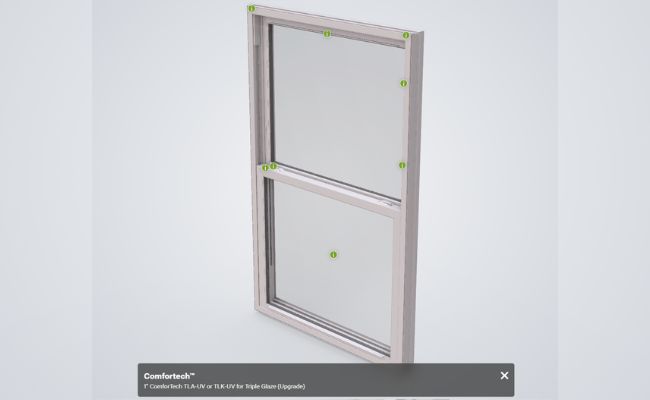
- Upper Sash: The upper part of the window that holds the glass. In double-hung windows, this sash can move up and down.
- Lower Sash: The lower part of the window that holds the glass and typically moves up and down in both single- and double-hung windows.
Glass
- Pane: A single sheet of glass within the window.
- Double/Triple Glazing: Refers to windows with two or three panes of glass, respectively, with air or gas-filled space between them for improved insulation.
Hardware
- Locks: Mechanisms that secure the window when closed.
- Lift/Pull Handles: Used to open or close the window.
- Balancers: Devices that counterbalance the weight of the sash in double-hung windows to keep them in place when open.
- Hinges: Found on casement or awning windows, these allow the window to swing open or closed.
- Crank Mechanism: Used in casement windows to open and close the sash.
Weatherstripping
- Seals: Material around the edges of the sashes and frames to prevent air and water infiltration.
Additional Features
- Muntins/Mullions: Strips of wood or metal that divide the panes of glass within a window. Muntins are the pieces that divide the glass into smaller sections within a sash, while mullions are the vertical or horizontal pieces that join two separate windows together and historically provided architectural support.
- Grilles: Decorative elements that sit on or between the panes of glass to give the appearance of divided panes.
Exterior Components
- Cladding: Material that covers the exterior of the window frame to protect it from the elements.
- Flashing: Installed around the window frame to direct water away from your home and prevent leaks.
What types of window opening mechanisms are available?
If you have an older home, you most likely have a single-hung window. In these windows, only the bottom sash moves up and down. If you want to replace your current single-hung windows with more of the same - that is an excellent option! However, before deciding, it is a good idea to learning about the other types of window opening mechanisms that are currently available:
Double-Hung Windows
Double-hung windows feature two sashes that both move up and down. This allows for better ventilation as you can open both the top and bottom sashes independently and simultaneously.
Sliding Windows
Sliding windows have one or more sashes that slide horizontally along a track. They are easy to operate and ideal for wide window openings.
Casement Windows
Casement windows are hinged on one side and open outward like a door using a crank mechanism. They provide excellent ventilation and are easy to clean from the inside.
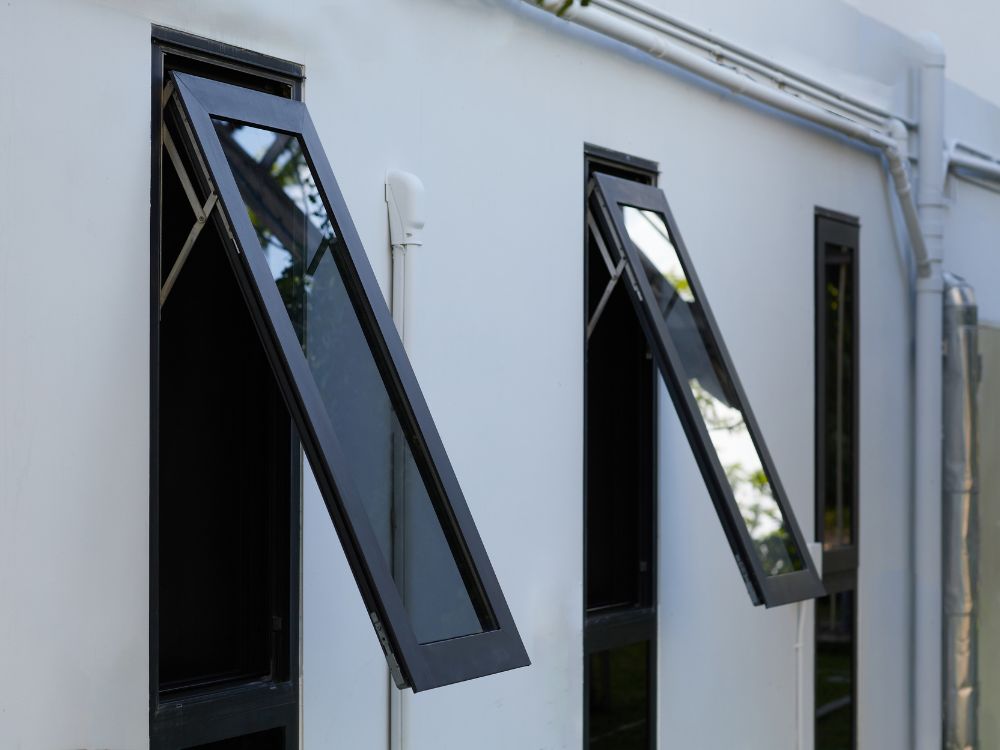
Awning Windows
Awning windows are hinged at the top and open outward from the bottom. They are often used in combination with other window styles and are ideal for providing ventilation even during rain.
Hopper Windows
Hopper windows are hinged at the bottom and open inward from the top. They are commonly used in basements and other small spaces.
Fixed Windows
Fixed windows do not open. They are used to provide natural light and views and are often used in combination with operable windows for ventilation.
Tilt and Turn Windows
Tilt and turn windows have a versatile design that allows them to open in two ways: they can tilt inward at the top for ventilation or swing inward like a door for easy cleaning and emergency egress.
What materials are available for window frames?
In addition to choosing how your windows open, another important consideration is the material of your new window frames. The frames play a deciding role in the overall performance, durability, and aesthetics of your installation.
Here’s a brief overview of the most common materials used for residential window frames:
Wood Window Frames
Wood has long been a traditional choice for window frames due to its natural beauty and excellent insulating properties. Wood windows offer a classic, timeless look that can be customized with paint or stain to match any interior or exterior decor.
However, wood frames require lots of regular maintenance, including painting or sealing, to prevent rot, warping, and insect damage. In addition to requiring lots of maintenance, they tend to be more expensive than other materials and so have declined in popularity in recent years.
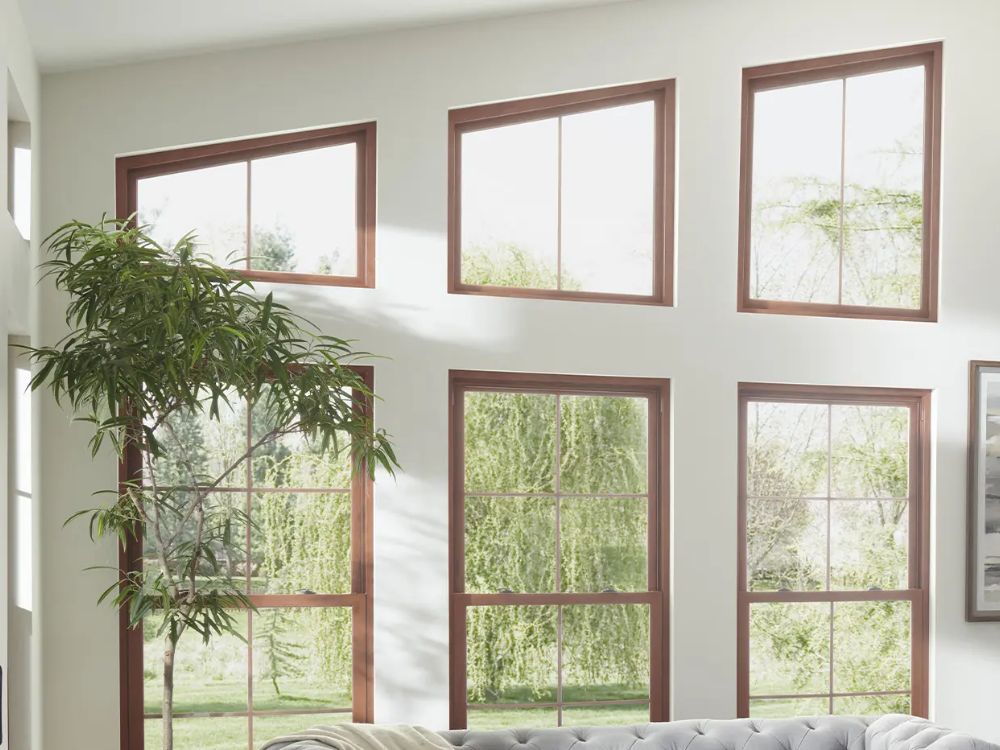
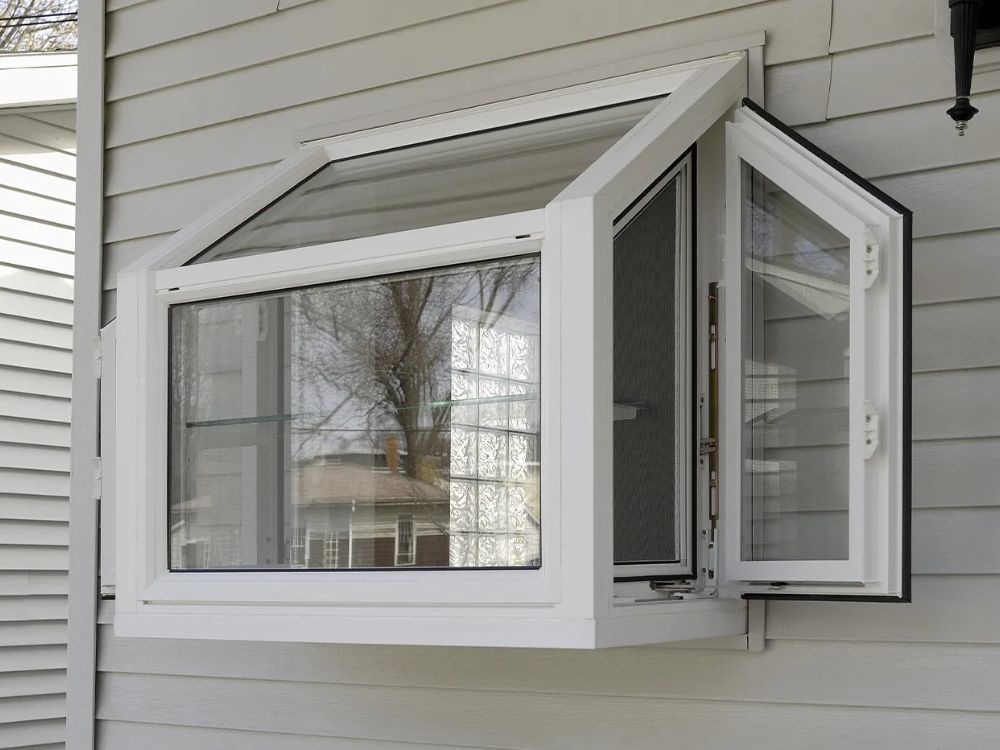
Vinyl Window Frames
Vinyl windows are a popular choice for homeowners seeking a low-maintenance, cost-effective option. Made from polyvinyl chloride (PVC), vinyl frames are resistant to moisture, won't warp, and require minimal upkeep outside of the occasional cleaning. They also offer good energy efficiency, as PVC is a poor conductor of heat.
However, depending on the manufacturer, vinyl windows may only be available in limited colors, and some homeowners may find them less aesthetically appealing than wood.
Aluminum Window Frames
Aluminum windows are known for their strength and durability and they are particularly well-suited for modern or industrial-style homes due to their slim profiles and sleek appearance.
Aluminum frames are lightweight, strong, and resistant to corrosion, making them a long-lasting option. However, they are less energy-efficient than other materials because metal conducts heat easily, which can lead to higher energy bills unless the frames are thermally isolated from your home.
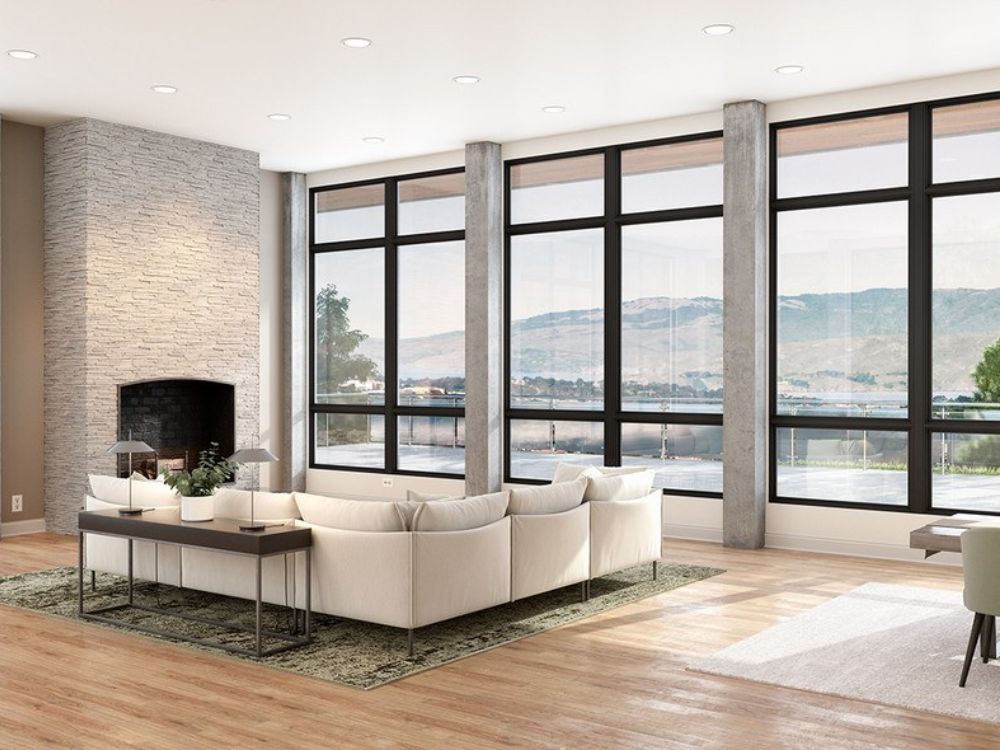
Fiberglass Window Frames
Fiberglass windows offer a balance between the durability of aluminum and the energy efficiency of vinyl. Made from glass fibers and resin, fiberglass frames are strong, resistant to weathering, and have excellent thermal performance. They can be painted and are available in a variety of colors and finishes. Fiberglass is also dimensionally stable, meaning it won’t expand or contract with temperature changes.
While more expensive than vinyl, fiberglass is often considered a good long-term investment due to its longevity and minimal maintenance requirements.
Composite Window Frames
Composite windows are made of multiple materials in order to get the best features of each while limiting their downsides. Typically they are made from a blend of wood fibers and PVC or other plastics. These frames are designed to mimic the appearance of wood while offering the low-maintenance benefits of vinyl or fiberglass.
Composite windows are strong, energy-efficient, and resistant to rot and decay. They can also be painted or stained, providing greater flexibility in design. Although they tend to be more expensive than vinyl, they are usually more affordable than wood or fiberglass.
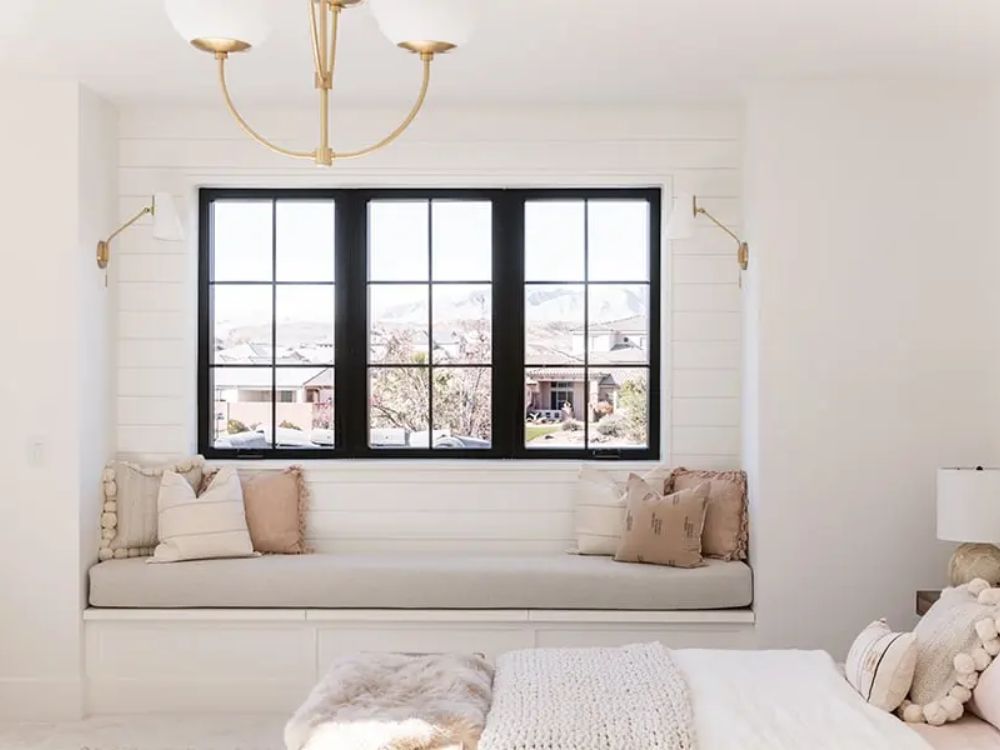
What are low-e windows?
Low-E windows, short for Low Emissivity windows, improve the energy efficiency of your home. These windows tend to cost a little more upfront but offer major improvements to both comfort and long-term savings on utility bills.
How do low-e windows work?
In simple terms, emissivity is the ability of a surface to emit radiant energy. Low-E glass has a microscopically thin, transparent coating that reflects long-wave infrared energy (or heat). This coating is applied to the glass surface, and while it’s invisible to the naked eye, it plays a significant role in managing the temperature inside your home.
The primary function of low-E windows is to minimize the amount of infrared and ultraviolet light that comes through the glass. This means your home stays warmer in the winter and cooler in the summer, making it more comfortable year-round.
Lw-E coatings provide four season benefits by reflecting interior temperatures back inside during colder months and reflecting the sun's rays away during warmer months, all while still allowing natural light to fill your space.
Why should you consider low-e windows?
The benefits of Low-e coatings on windows are substantial, especially when it comes to energy efficiency and comfort.
- Energy Efficiency: Low-E windows significantly reduce the amount of energy needed to heat and cool your home. According to the EPA, these coatings reduce energy loss by 30 to 50%, ultimately resulting in significantly lower utility bills.
- Enhanced Comfort: With Low-E windows, you’ll notice less heat build-up in rooms that receive a lot of sunlight during summer. This benefit continues in the winter with indoor heat being reflected back into your home. This results in a more consistent and comfortable indoor temperature throughout the year.
- UV Protection: Another important benefit of Low-E windows is their ability to block out harmful ultraviolet (UV) rays. UV rays can cause fading of your furniture, carpets, flooring, and artwork. Low-E coatings block up to 99% of these rays, helping to protect your interior furnishings from sun damage.
- Environmental Impact: By reducing the amount of energy your home uses for heating and cooling, Low-E windows also help decrease your home’s carbon footprint. This makes them a more environmentally friendly option compared to standard windows.
- Increased Property Value: With energy prices trending upwards, energy efficiency has become a significant factor for homebuyers, making Low-E windows a valuable feature when it comes time to sell your home.
What are the main types of Low-e coatings for home window replacements?
There are two primary types of Low-E coatings, hard-coat and soft-coat.
- Hard-Coat Low-E (Pyrolytic Coating): This type of Low-E coating is applied during the glass manufacturing process when the glass is still hot. The coating becomes part of the glass itself, making it highly durable and able to withstand harsh conditions.
Hard-coat Low-E is typically used in colder climates because it allows some of the sun's heat to pass through the glass, which can help with warming a home during the winter. - Soft-Coat Low-E (Sputtered Coating): Soft-coat Low-E is applied after the glass is manufactured, in a vacuum chamber at a much lower temperature.
This type of coating is more delicate and requires additional protection, such as being sandwiched between panes of glass. Soft-coat Low-E is more effective at blocking infrared light and is generally more energy-efficient than hard-coat Low-E, making it ideal for regions with more intense summer weather.
How do low-e windows enhance energy efficiency?
One of the most significant advantages of Low-E windows is their ability to enhance the energy efficiency of your home. To understand how this works, it’s important to understand two key metrics used to measure window performance: U-Factor and Solar Heat Gain Coefficient (SHGC).
- U-Factor: The U-Factor measures how well a window prevents heat from escaping a building. It’s essentially the inverse of R-value, which you might be familiar with from insulation. The lower the U-Factor, the better the window is at insulating your home. Low-E coatings help reduce the U-Factor of windows by reflecting heat back into the home during the winter, which minimizes heat loss through the glass.
- Solar Heat Gain Coefficient (SHGC): The SHGC measures how well a window blocks heat from the sun. It’s expressed as a number between 0 and 1; the lower the SHGC, the less solar heat the window transmits. Low-E coatings can be engineered to either allow or block more solar heat, depending on the climate.
For example, in colder climates, a higher SHGC may be desirable to allow more solar heat into the home during the winter, while in warmer climates, a lower SHGC can help keep the home cooler by blocking more solar heat.
By optimizing these two metrics, Low-E windows can significantly reduce the need for heating and cooling, which not only lowers your energy bills but also lessens the strain on your HVAC system. In fact, studies have shown that homeowners can save up to 20% on their energy bills by installing Low-E windows.
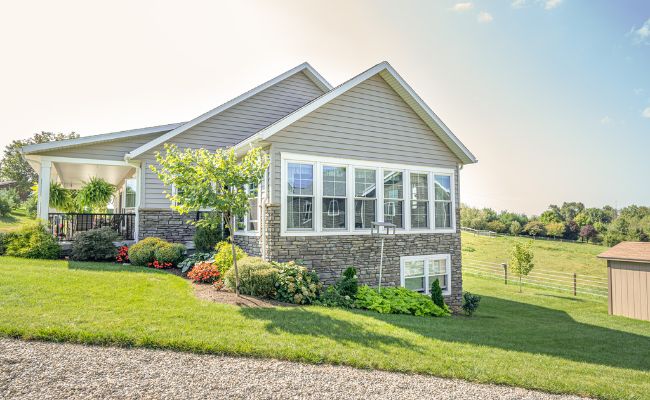
Image Credit: https://www.provia.com/windows/gallery/
What are typical ranges for U-factor and Solar Heat Gain Coefficient?
U-Factor - U-Factor measures the rate of heat loss through the window. Lower values indicate better insulation properties.
- Single Pane Glass (Uncoated):
- Typical U-Factor: 0.9 - 1.2
- Double Pane Glass (Uncoated):
- Typical U-Factor: 0.45 - 0.55
(Double-pane windows offer better insulation than single-pane windows, with two layers of glass trapping air or gas in between.)
- Typical U-Factor: 0.45 - 0.55
- Double Pane Low-E Glass:
- Typical U-Factor: 0.25 - 0.35
(Low-E coatings on double-pane windows significantly reduce heat loss, leading to much lower U-Factor values.)
- Typical U-Factor: 0.25 - 0.35
Solar Heat Gain Coefficient (SHGC) - SHGC measures how much solar radiation is admitted through the window. Lower values indicate better blocking of solar heat.
- Single Pane Glass (Uncoated):
- Typical SHGC: 0.7 - 0.85
- Double Pane Glass (Uncoated):
- Typical SHGC: 0.65 - 0.75
(Double-pane windows reduce solar heat gain somewhat compared to single-pane, but still allow a significant amount through.)
- Typical SHGC: 0.65 - 0.75
- Double Pane Low-E Glass:
- Typical SHGC: 0.2 - 0.45
(Low-E coatings can be tailored to block a significant portion of solar heat, with SHGC values varying based on the specific coating used.)
- Typical SHGC: 0.2 - 0.45
What is the ideal U-Factor / SHGC for my windows?
Choosing the correct U-Factor and SHGC value for your windows mostly involves considering your geographic region - although in colder climates the orientation of your windows plays an important role.
For us here in South Carolina, as well as much of the non-tropical regions of the American South, the US Department of Energy recommends a U-Factor of ≤ 0.60 and a SHGC of ≤0.27.
How window orientation changes optimal U-Factor & SHGC
In warm climates, the direction your windows face (North, South, East, or West) does not make major differences for the optimal U-Factor and SHGC of your windows. The reason for this is simple: in the summers you want the lowest possible SHGC to keep heat out, and in the winter you want a low U-factor to keep heat in.
However, these recommendations change when you move to colder climates as solar heating becomes less of a problem in the summer and more of a benefit in the winter.
Accordingly, the US DOE advises that homeowners try to choose windows that have the highest SHGC and lowest U-Factor that they can afford for their south-facing windows.
Why the south? Simple: South facing windows receive more hours of sunlight (and more intense sunlight) than any other window. By having a high SHGC the windows will admit more heat into your home, allowing you to spend less money on heating your home during sunny winter days.
For the rest of the windows in cold climate homes, the windows primarily should be more like the ideal warm weather windows and have both a low U-Factor and a low SHGC.
Are Low-E windows tinted?
No. While the coatings are able to block invisible wavelengths of light, they permit nearly all of the sun’s visible light to pass through uninterrupted.
Some people are able to discern a very slight green hue to Low-E coated windows, but the difference is very small and outside careful scrutiny during a side-by-side examination you are unlikely to notice any tint at all.
How do you maintain Low-e windows?
Maintaining Low-E windows is straightforward, but there are a few key things to keep in mind to protect the integrity of the Low-E coatings and extend the life of your windows.
Cleaning Low-E Windows: Best Practices
1. Use the Right Cleaning Solutions:
-
- When cleaning Low-E windows, it’s important to use a mild, non-abrasive cleaning solution. Harsh chemicals, such as ammonia or alcohol-based cleaners, may be able to damage the Low-E coating, reducing its effectiveness.
- A simple solution of warm water and a few drops of mild dish soap is usually sufficient. You can also use a commercially available window cleaner, as long as it’s specifically labeled as safe for Low-E glass.
2. Avoid Abrasive Tools:
-
- When it comes to cleaning tools, avoid anything that could scratch or damage the surface of the glass or the Low-E coating. Use a soft, lint-free cloth, a microfiber towel, or a squeegee to clean your windows.
- Avoid using abrasive pads, steel wool, or any rough materials that could scratch the glass.
3. Cleaning Technique:
-
- Start by rinsing the window with clean water to remove any loose dirt or debris. This prevents scratches during the cleaning process.
- Apply your cleaning solution using a soft cloth or sponge. Wipe gently in a circular motion to remove smudges and fingerprints.
- Rinse the window again with clean water to remove any soap residue, which can leave streaks.
- Finally, use a dry microfiber cloth or squeegee to dry the window, working from top to bottom to avoid streaking.
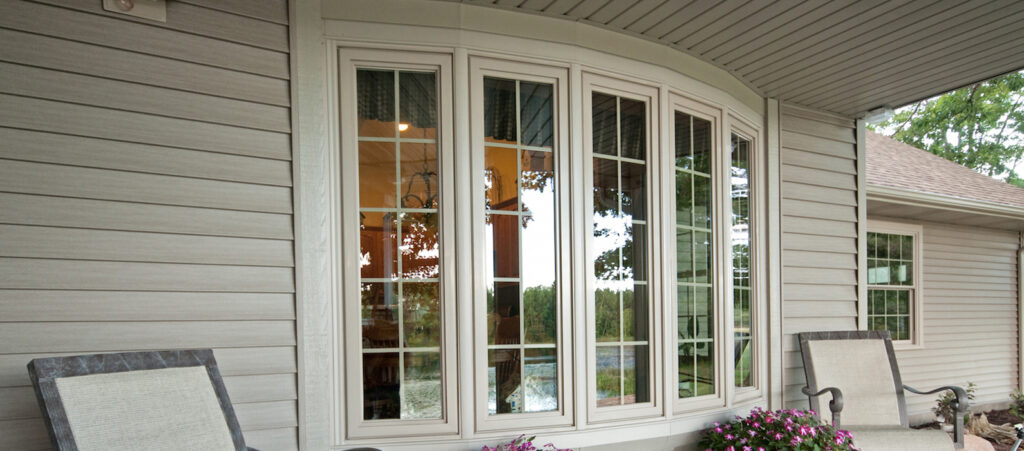
What are hurricane windows and do I need them?
South Carolina sits squarely in the path of hurricanes and tropical storms, and has weathered a hit from a severe storm in 43 of the past 50 years. This means that for South Carolinians living near the coast, there is a roughly 86% chance that this year will bring another major storm with high winds capable of throwing heavy objects.
Hurricane windows are a great way to protect your home from these frequent threats. These windows are constructed with laminated glass like you find in car windshields, and consists of two or more panes of glass bonded together with a durable middle layer, typically made of polyvinyl butyral (PVB) or ethylene-vinyl acetate (EVA).
This construction allows the glass to withstand high winds, and flying debris without shattering into dangerous shards. Even if the outer layer of glass cracks, the interlayer holds the pieces in place, maintaining the integrity of the window and reducing the risk of injury or property damage.
Will hurricane windows lower my homeowners insurance rate?
For homeowners living in the path of hurricanes, upgrading to hurricane resistant windows isn’t just good insurance against storms, it can be good for your insurance premiums too!
While your savings and eligibility is dependent upon your insurer, one report suggested that at-risk homeowners could expect to save between $108 and $162 per year. This isn’t perhaps a major cost savings - but these savings add up over time and windows are a long lasting home upgrade so the benefits accrue for many years. Even better, hurricane resistant windows can ultimately save you thousands of dollars in water damage should a major storm blow through your area.
When is the best time of year to replace your windows?
The window replacement process takes relatively little time, and so can be performed almost any time of the year. We recommend scheduling replacements for the fall, as the weather is often mild and contractors tend to have more availability.
During the summer months, you may find that contractors have busier schedules and you might need to wait for an appointment.
Are there any tax credits available for residential window replacements?
Yes! From 2023 to 2032 the Clean Energy tax credit is available for energy efficient window replacements. This Federal tax credit covers 30% of the cost of a window installation project, up to $600.
How do I know if my windows qualify for the Clean Energy Tax Credit?
For a window installation to qualify for the federal tax rebate program, the new windows must meet Energy Star’s “Most Efficient” requirements.
This rating is awarded to products which “represent the year’s very best for energy savings” and the list of qualifying products changes annually. It is a good idea to speak with your window installer and then confirm that their products are eligible for the tax credit.
What questions should you ask when looking for a window installation contractor?
Choosing the right contractor is crucial for your window replacement project. Here are some key questions to ask when getting a quote for window replacements:
- Are you licensed and insured?
It is essential to work with a licensed and insured contractor. This protects both you and your property and no matter how good a deal is being offered, this should be non-negotiable! - What is your experience with window installations?
Look for contractors with a solid track record and specific experience in window installations. - Can you provide references or examples of past work?
Reviewing previous projects can give you an idea of the contractor’s quality of work. - What is the estimated timeline for the project?
Understand how long the project will take and what the process will look like. - What warranties do you offer?
Ensure that both the windows and the installation are covered by a warranty for peace of mind. Note that warranties often vary based on which particular brand of window you have chosen - so it may help to have an idea ahead of time what kind of window you’re looking for.
Should I get multiple quotes before choosing a window installer?
We believe that talking to multiple glass installation companies is a great way to ensure you get a high quality installation, good materials, and a fair installation price. While you may be tempted by the cheapest offer on the table, you should approach surprisingly low offers with a reasonable amount of skepticism and ask yourself why the price is so much lower.
If you’re ready to get a no-obligation quote, our professional window installers are here to help!